Staggered Wheels Explained: Meaning, Fitment & How to Set It Up
What a staggered wheel setup is, how staggered fitment works, staggered vs square, the trade-offs, and how to spec and sell one correctly.
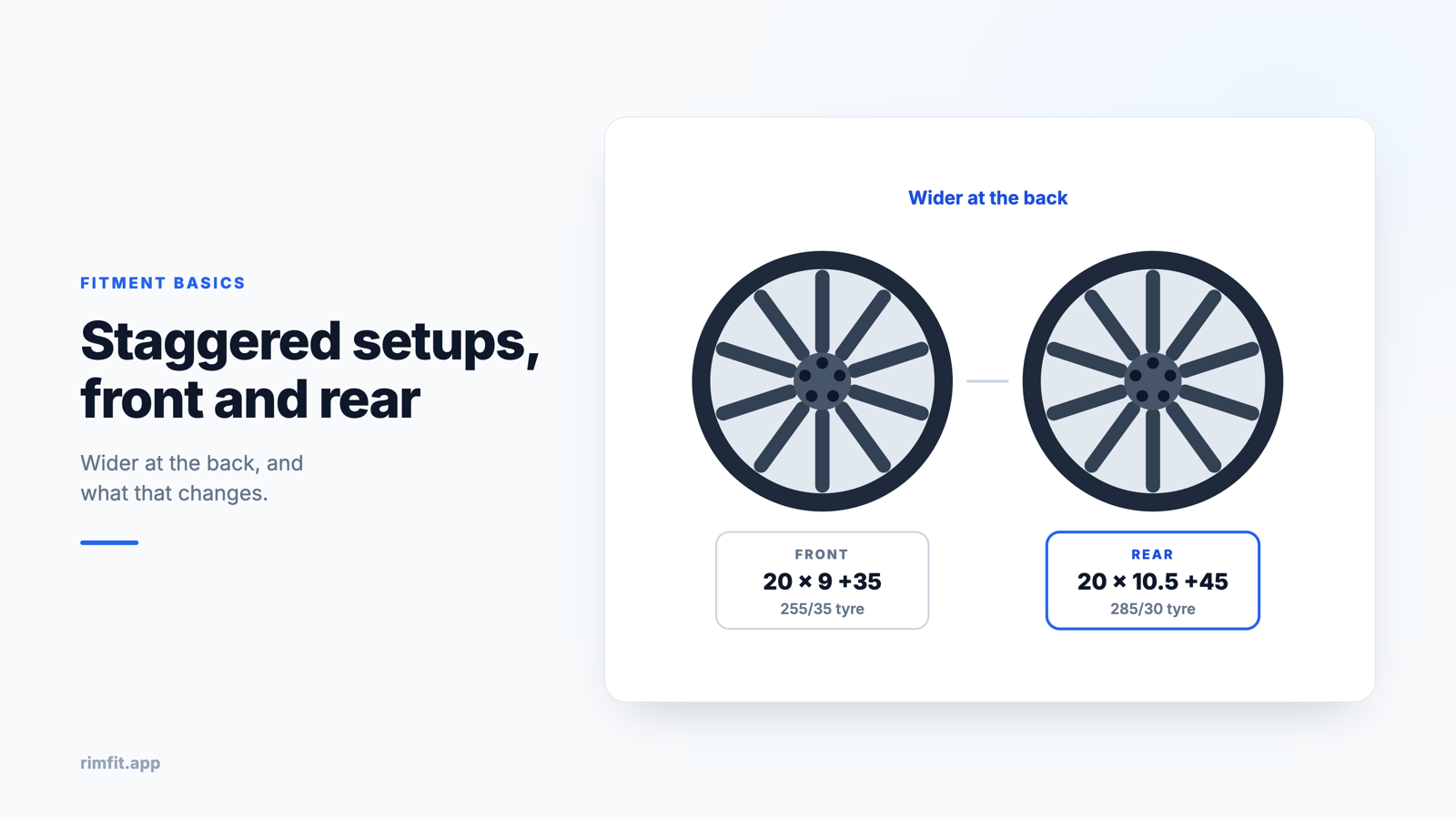
If you've shopped for wheels, you've seen the word "staggered" and plenty of conflicting advice about whether to run it. This guide explains what a staggered setup is, how the fitment works, how to read the sizes, and how to set one up without an expensive mistake.
What is a staggered wheel setup?
A staggered setup is one where the wheels and tires on one axle are wider than on the other, and sometimes larger in diameter too. In almost every case the rear wheels are the wider ones. When all four wheels are the same size, it's called a square setup.
Staggered fitment is most common on rear-wheel-drive performance cars such as the Mustang, Camaro, Charger and many BMWs, where it improves rear traction and gives the car a wide, planted stance.
How to read staggered wheel sizes
A staggered spec lists the front and rear separately, for example 20x9 +35 (front) / 20x10.5 +40 (rear). Reading it left to right:
- 20 is the wheel diameter in inches, the same front and rear here.
- 9 and 10.5 are the widths in inches. The rear is 1.5" wider, and that difference is the stagger.
- +35 and +40 are the offsets in millimeters, which set where the wheel sits in the fender.
The diameter is usually the same front and rear, and only the width and tire change. Some setups also stagger the diameter, like 19" front and 20" rear, but width-only is the usual case.
Staggered vs square
A square setup uses the same wheel and tire size on all four corners. You can rotate the tires, it costs less, and it's the right choice for most all-wheel-drive cars and daily drivers. A staggered setup has a wider rear, which gives more rear grip and a more aggressive stance, but you can't rotate the tires and it costs more.
Why run a staggered setup?
On a powerful rear-wheel-drive car, a wider rear tire puts more rubber on the road and cuts down on wheel spin when accelerating. The wider rear also fills the wheel well and gives the muscular look a lot of enthusiasts want. And set up properly, a staggered setup can suit the car's natural weight balance.
The trade-offs
- You can't rotate the tires, because front and rear are different sizes. The rears wear faster and cost more to replace.
- It can be risky on AWD. Different rolling diameters can strain an all-wheel-drive system, so most AWD cars should stay square unless the staggered set keeps the same overall tire diameter front to rear.
- It costs more: two tire sizes, and sometimes two wheel widths to stock.
- You can't swap a front wheel onto the rear in a pinch.
How to set up staggered wheels
Getting staggered fitment right mostly means matching widths, offsets and tire sizes to the car. Check these before you order:
- Make sure the car suits it. A rear-wheel-drive performance car is a good candidate. A daily driver or AWD car should probably stay square.
- Bolt pattern and hub bore have to match the vehicle, as with any wheel. (See why the same bolt pattern can still not fit.)
- Front and rear width and offset need to stay within the vehicle's range so nothing pokes out or rubs. (Offset explained.)
- Pick the right tire size for each width so the sidewall isn't stretched or ballooned, and ideally so the overall diameter matches front to rear.
- Check fender, suspension and brake caliper clearance at full lock and full compression.
See it on your customer's actual car
RimFit turns a photo of the car + any set of rims into a photoreal preview in seconds. Built for tire & wheel shops.
RimFit for shops →See the stance before you commit
Half an inch of rear stagger changes how the whole car sits, and that's hard to picture from a spec sheet. It's much better to see the staggered wheels on the actual car before buying. That's what RimFit does for wheel and tire shops: photograph the customer's car, put the wheels on it, and show a photoreal preview in seconds.
Keep reading: what 18x8 +35 means, wheel fitment basics and how to find your bolt pattern.
Frequently asked questions
What does a staggered wheel setup mean?
It means the rear wheels and tires are wider, and sometimes larger in diameter, than the front ones. It's used mostly on rear-wheel-drive performance cars for more rear traction and a more aggressive stance. When all four wheels are the same size, it's called a square setup.
How do you read staggered wheel sizes?
Staggered specs list front and rear separately, for example 20x9 +35 front and 20x10.5 +40 rear. The first number is the diameter, the second is the width (the wider rear is the stagger), and the plus or minus number is the offset in millimeters.
Is staggered better than square?
It depends on the car. Staggered gives better rear traction and a more aggressive look on rear-wheel-drive cars, but you can't rotate the tires and it costs more. Square is better for daily drivers and most all-wheel-drive vehicles, because you can rotate the tires and avoid strain on the drivetrain.
Can you run staggered wheels on an AWD car?
It's usually not recommended. Different front and rear rolling diameters can strain an all-wheel-drive system. Most AWD cars should run a square setup unless the staggered wheels keep the same overall tire diameter front to rear. Check the manufacturer's guidance.
Can you rotate tires on a staggered setup?
No. The front and rear tires are different sizes, so they can't be swapped front to back, and the rear tires usually wear out sooner.
Show customers their car — before they buy
RimFit is the AI wheel visualizer built for tire & wheel shops.
RimFit for shops →