What Does 18x8 +35 Mean? Wheel Size and Offset in Plain English
Wheel specs like 18x8 +35 look like a code. Here's what the diameter, width and offset numbers mean, and why they decide how wheels sit on your car.
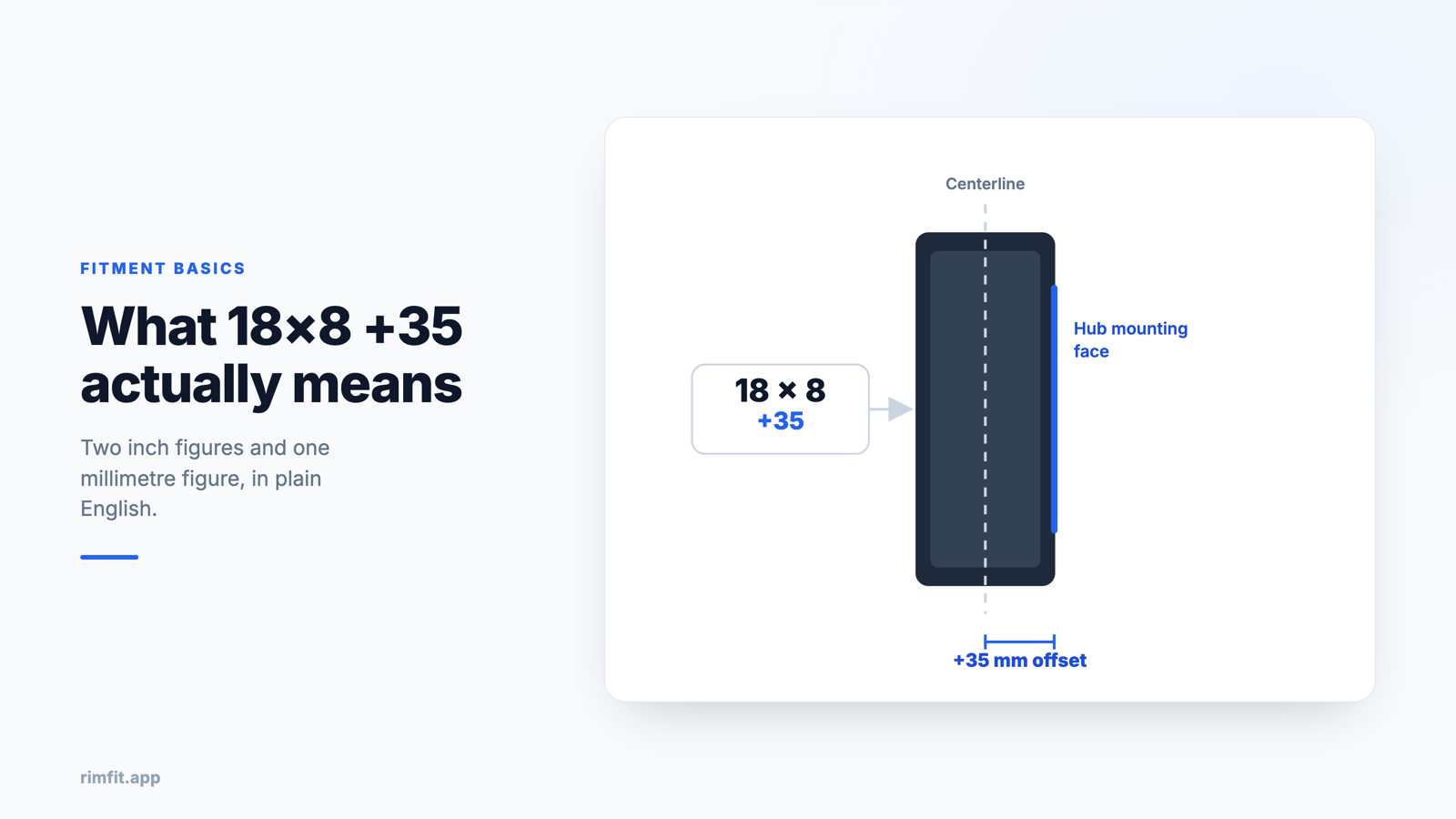
You've found wheels you like and the listing says 18x8 +35. If that reads like a code, you're in good company. It's the most confusing part of buying wheels. Here's what each number means.
The first two numbers: diameter and width
In 18x8, the first number is the diameter: 18 inches, or how tall the wheel is. The second is the width: 8 inches, measured between the bead seats rather than across the outer lip. A bigger diameter fills more of the wheel well, and a wider wheel lets you run a wider tire and changes the stance.
The +35 is the offset
Offset is the distance in millimeters from the wheel's mounting surface (where it bolts to the hub) to its centerline.
- Positive offset, like +35, means the mounting surface sits toward the outside of the wheel, which tucks the wheel in toward the suspension. Most modern cars use positive offset.
- Zero offset means the mounting surface is exactly in the center.
- Negative offset, like -12, puts the mounting surface toward the inside and pushes the wheel out for an aggressive, lip-out look.
Offset decides whether a wheel sits flush, tucks in or pokes out past the fender. Get it wrong and you get rubbing, poke, or a wheel that looks sunken.
Backspacing, which the listing doesn't show
Backspacing is the distance from the mounting surface to the back edge of the wheel. It describes the same thing offset does from a different reference point, and shops often use it to check clearance against brakes and suspension.
Why the same wheel looks different on different cars
An 18x8 +35 might sit perfectly flush on one car and poke out on another, because every vehicle has its own factory range. That's why a spec sheet on its own can't tell you how a wheel will look on your car.
See it on your customer's actual car
RimFit turns a photo of the car + any set of rims into a photoreal preview in seconds. Built for tire & wheel shops.
RimFit for shops →See it instead of guessing
Specs tell you whether a wheel will physically fit, but not whether you'll like how it looks. The quickest way to find out is to see the exact wheel on your actual car before you buy, so the numbers aren't a gamble.
Next, read why two wheels with the same bolt pattern still might not fit and wheel fitment basics.
Show customers their car — before they buy
RimFit is the AI wheel visualizer built for tire & wheel shops.
RimFit for shops →